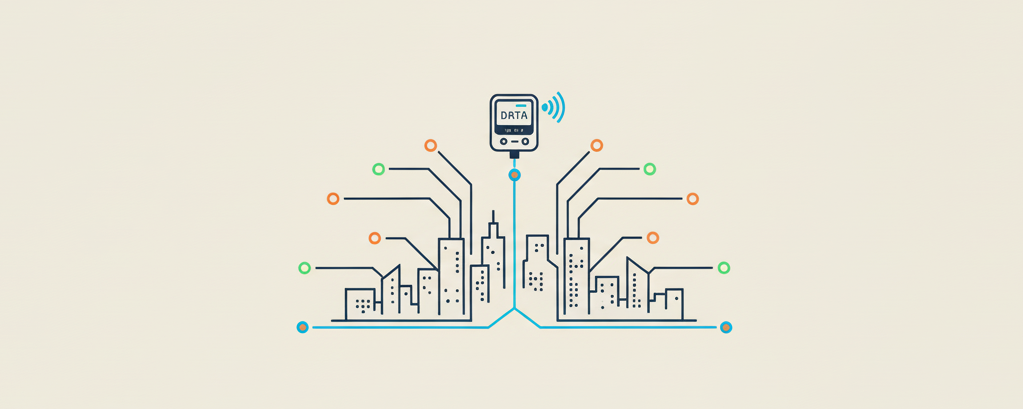

Smart cities aren’t just government dreams anymore. All over India, private townships, industrial zones, and even corporate campuses are quietly building their own digital backbones. Think IoT gadgets, automation, and real-time data humming along in the background.
Sure, public programs like SmartCities.gov.in got people talking, but it’s the private players who are moving fast and showing real results. They’re not just talking about the future—they’re building it.
Take those IoT-linked streetlights. Suddenly, you’re cutting electricity bills by 70%. Or smart meters—no more manual readings, no more billing headaches. These intelligent energy systems are quickly becoming the foundation of tomorrow’s high-end properties.
Last time, we talked about smart meters and how data-driven utilities are shaking up city grids. Now, let’s shift gears and look at the private smart city wave—and how these new developments are using Urban Energy Intelligence to slash operating costs, attract more residents, and keep everything running smoothly for years to come.
The Rise of Private Smart Infrastructure in India
Smart infrastructure isn’t just a government thing anymore. Over the past three years, big names like Lodha, Godrej, Hiranandani, and Embassy have started rolling out IoT-powered energy automation across their campuses.
Why? It’s simple: operational efficiency is the new luxury. Every unit of energy saved, every minute shaved off maintenance, goes straight to the bottom line—and keeps residents happy.
Here’s what’s changing:
Gated communities now have lights that adjust automatically as people come and go.
Campuses track water and energy use in real time, thanks to smart meters.
Industrial parks use AI to spread energy where it’s needed most.
These places are running as self-contained, data-driven smart cities—independent and ready for what’s next.
What Is “Urban Energy Intelligence”?
Urban Energy Intelligence, or UEI, is basically the brains of your property’s energy. It connects, watches, and manages everything from lights to pumps, making the whole place run smarter.
Think of it as the nervous system of your township.
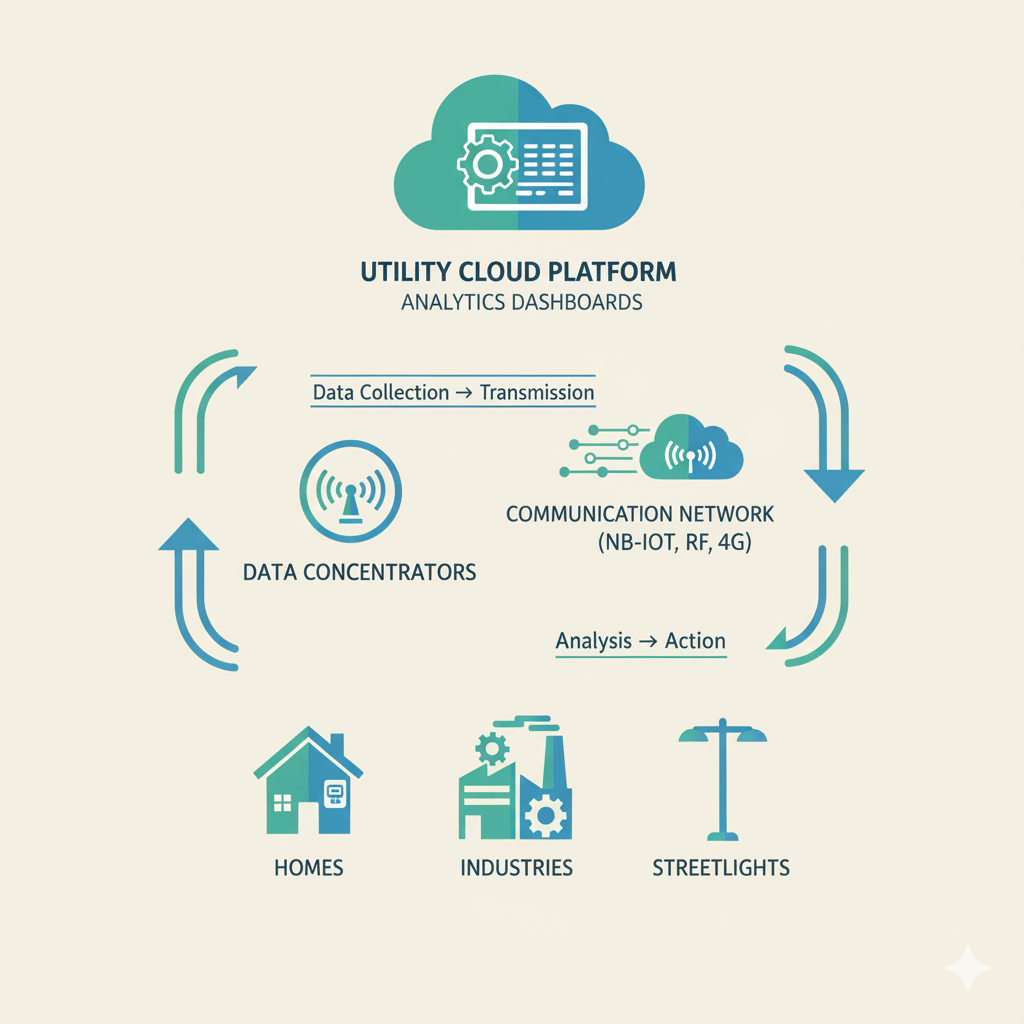
A typical UEI setup looks like this:
IoT devices everywhere—smart meters, lighting controls, sensors.
A communication layer—maybe RF, LoRa, NB-IoT, or 4G.
A cloud platform that pulls all the data together and puts it on easy-to-use dashboards.
AI analytics that spot patterns, flag faults, and predict what needs fixing.
Put it all together, and you get remote, automated, intelligent control. That’s what turns an ordinary property into a living, breathing digital ecosystem.
Why Private Developers Are Starting with Smart Streetlights
Lighting is the easiest place to start with smart infrastructure—and it’s the quickest to pay off.
The Old Way:
Lights run 12–14 hours a day.
Staff switch them on and off by hand.
No way to check what’s happening in real time.
Lots of energy wasted, sometimes 40% more than needed.
The Smart Way:
Each streetlight is hooked up to an IoT controller.
Schedules and brightness adjust automatically with ambient light.
You can turn lights on, off, or dim them, all from a dashboard.
Get alerts before anything breaks.
The Results:
Energy bills drop by up to 70%.
Maintenance costs fall by 30–50%.
Failures get spotted fast, so there are fewer outages.
Just look at a gated township in Pune—300 acres, and they slashed lighting costs from ₹1.4 crore to ₹52 lakh a year in just eight months, all thanks to connected streetlights.
Want to see how it works? Book a demo and watch smart streetlights cut energy costs by 70%.
Smart Meters—The Heart of Intelligent Billing and Energy Control
If streetlights are a township’s eyes, smart meters are its heartbeat. They do all the heavy lifting:
No more manual readings—data updates automatically.
Prepaid and pay-as-you-go billing, no fuss.
Live dashboards show exactly what’s being used.
Instant alerts for weird usage or tampering.
For big housing complexes and industrial parks, this is a game-changer:
Tenant billing gets easier.
Everyone sees exactly what they’re using.
Problems like line losses get spotted fast.
Solar and EV charging systems plug right in.
Here’s a real-world win: a premium society in Hyderabad installed 1,800 smart meters and cut operational overhead by more than 22% in a year.
How IoT Ties It All Together
Urban Energy Intelligence really shines when everything is connected. That’s when you see the magic:
Streetlights sync with real-time grid demand.
Peak loads get predicted, and backup power is used smarter.
Sustainability reports generate themselves.
Easily connect to building management or solar systems.
With this unified setup, energy visibility turns straight into profit.
Quick Architecture Snapshot:
Smart meters and lighting controllers send data over LoRa or NB-IoT. It all goes to the IoT cloud platform, then shows up on the Energy Intelligence Dashboard. And just like that, you’re running a smarter, more efficient property.
Key ROI Metrics Developers Care About
| Metric | Before IoT | After IoT Implementation |
| Energy Cost | 100% | ↓ 40–70% |
| Maintenance Downtime | High | ↓ 50% |
| Billing Accuracy | Manual & error-prone | 99.9% Automated |
| Operational Transparency | Limited | Real-time dashboard |
| Resident Satisfaction | Reactive | Data-driven & responsive |
These numbers are not abstract — they’re based on actual deployments in Indian townships and campuses between 2022–2024.
Implementation Blueprint for Private Townships
Phase 1: Energy Audit
Start by mapping out every lighting and metering point. Check if the current setup can handle smarter systems.
Phase 2: IoT Rollout
Now, install smart controllers and gateways. Hook everything up to the cloud so you can see what’s happening, anytime.
Phase 3: Data Intelligence
Track energy use in real time. Set up dashboards that actually show you how things are performing — no guesswork.
Phase 4: Optimization & Scale
Fine-tune dimming schedules to squeeze out more savings. Add prepaid billing for flexibility. Bring in renewables to push sustainability even further.
Pick the right partner, and most private townships see their investment pay off in 12 to 18 months.
Why B2B Developers Aren’t Waiting Around
Energy bills keep jumping 8–12% every year. ESG standards and sustainability aren’t optional anymore — especially if you’re building something premium. These days, “Smart Township” isn’t just a buzzword; it’s a real selling point.
Developers want control, not dependence on city grids. Plus, they want proof — real-time dashboards that show instant ROI.
For high-end projects, smart infrastructure isn’t just about cutting costs. It’s about making a statement.
What’s Happening in the Real World?
Case 1: Integrated Township, Gujarat
Connected 2,400 streetlights. Cut energy use by 65%. Saw full ROI in 11 months.
Case 2: Corporate Park, Bengaluru
Installed 1,200 smart meters. Automated billing for 80+ tenants. Not a single manual reading error since launch.
Case 3: Residential Township, Hyderabad
Blended IoT and solar. Dropped energy consumption by 43%. Maintenance calls fell by 60%.
Shaping the Future — One Smart Township at a Time
Private developments aren’t waiting for the public sector to catch up. They’re building their own smart, self-sufficient cities — connected, data-driven, and ready for the future.
With IoT streetlights, smart meters, and powerful dashboards, developers can boost property value, cut operating costs, keep maintenance smooth, meet ESG requirements, and give residents a better experience from day one.
It’s all within reach — your township can be smarter, greener, and more efficient right out of the gate.
Urban Energy Intelligence isn’t just some idea anymore; it’s what sets the leaders apart.
The developers weaving IoT-powered lighting and metering into their projects today won’t just save energy. They’ll create living, learning infrastructures that adapt and optimize on their own.
The future? It’s not just about smart cities. It’s about smart, private ecosystems built by people who move first.